
Disclosure: As an Amazon Associate, Sweet Home Advisor earns from qualifying purchases. If you buy through links on this page, we may earn a small commission at no extra cost to you.
Every tank water heater slowly collects sediment: minerals from your water that settle at the bottom of the tank. Over time that layer makes the heater noisy, slower and less efficient, and it can shorten the tank’s life. Flushing the tank once a year clears it out, takes about an hour, and needs nothing more than a garden hose.
This guide walks you through flushing a gas or electric tank water heater safely, step by step. If you have a tankless unit, the process is different; see how to flush a tankless water heater.
Quick summary
- Turn off the power (electric) or set the gas control to OFF or Pilot (gas).
- Let the water cool for a few hours.
- Close the cold water supply valve.
- Connect a garden hose to the drain valve and run it to a floor drain or outside.
- Open a hot water tap in the house, then open the drain valve.
- Flush with short bursts of cold water until the water runs clear.
- Close the drain, refill the tank completely, then restore power or gas.
How often should you flush a water heater?
A. O. Smith recommends flushing most tank water heaters at least once a year, and more often if you have hard water or hear rumbling or popping from the tank. Always check your heater’s owner’s manual, as some manufacturers give their own schedule.
What you need
- A garden hose long enough to reach a floor drain or outside
- A bucket and some towels
- A flathead screwdriver (some drain valves need one)
- Thick gloves and safety glasses
- Optional: a water heater flush kit or a full-port brass drain valve if your plastic valve clogs easily
Safety first
- Scalding: the water in the tank can be hot enough to burn. Let it cool for a few hours first, and wear gloves and glasses.
- Electric heaters: never switch the power back on until the tank is completely full. Heating elements that run in an empty tank (a “dry fire”) burn out within seconds.
- Gas heaters: set the gas control to OFF or Pilot (or Vacation) before draining, and follow the relighting instructions on your heater’s label afterwards.
- Flooding: know where your home’s main water shutoff is before you start.
Step-by-step: how to flush a tank water heater
1. Turn off the power or gas
For an electric heater, switch off its breaker at the main panel. For a gas heater, turn the gas control knob to OFF or Pilot. Ideally, turn it off a few hours before you start (or the night before) so the water has time to cool.
2. Close the cold water supply
Find the cold water inlet pipe on top of the heater and turn its valve clockwise to close it. If there is no valve, use your home’s main water shutoff.
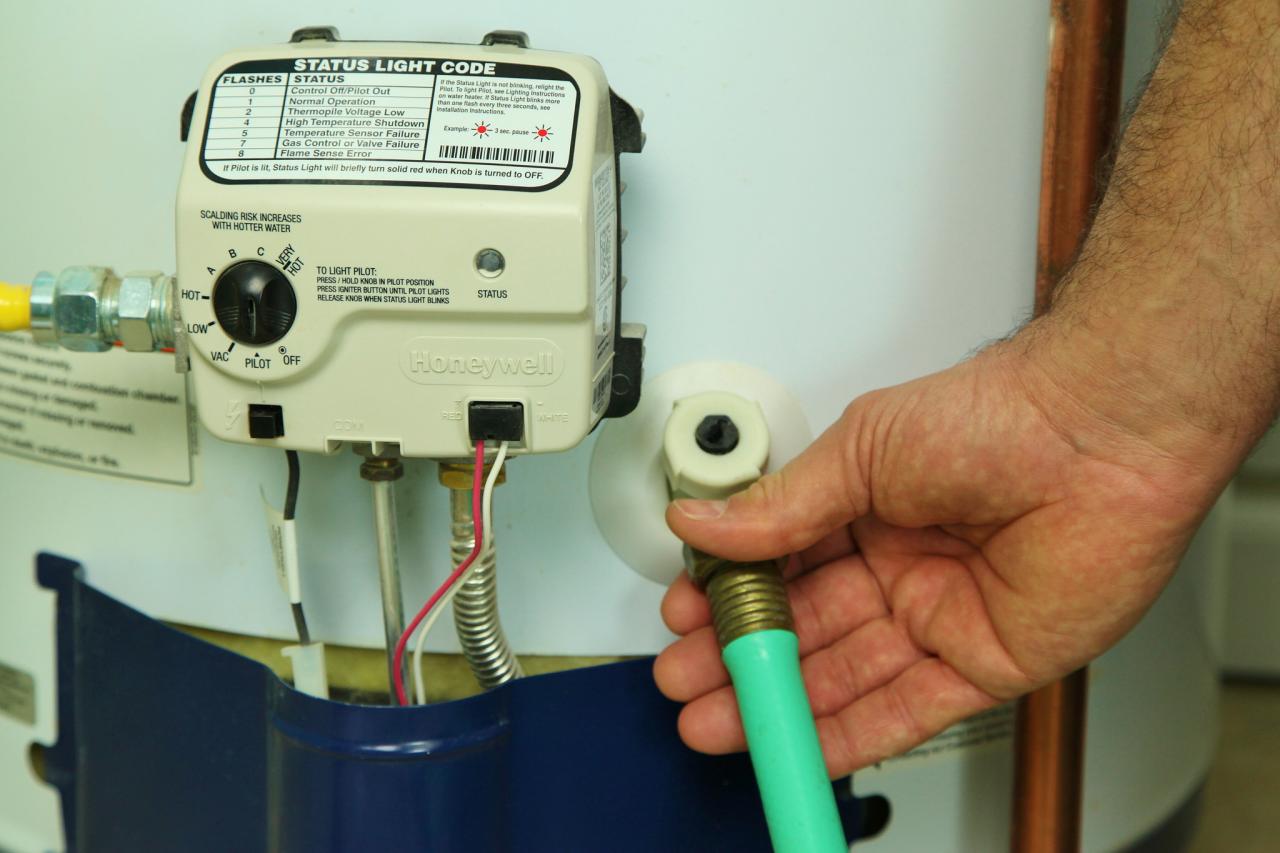
3. Connect the hose
Screw a garden hose onto the drain valve near the bottom of the tank. Run the other end to a floor drain, a utility sink, or outside to a spot lower than the valve so the water can flow out by gravity.
4. Open a hot water tap
Open a hot water faucet somewhere in the house, ideally on a floor above the heater. This lets air into the tank so it drains freely instead of glugging.
5. Open the drain valve and drain the tank
Open the drain valve by hand or with a screwdriver. The water will come out cloudy or full of grit at first. Let the tank drain. If water keeps flowing strongly long after you expect the tank to be empty, the cold supply valve may not be fully closed.
6. Flush out the sediment
Once the tank is nearly empty, briefly open the cold water supply for a few seconds at a time to stir up the sediment on the bottom, then let it drain again. Repeat until the water from the hose runs clear.
If the drain valve clogs: sediment can block small plastic valves. Try closing and reopening the valve a few times. If the tank won’t drain at all, stop and call a plumber rather than forcing the valve.
7. Close the drain and refill the tank
Close the drain valve and remove the hose. Open the cold water supply fully and leave the hot tap you opened earlier running. When water flows steadily from that tap with no sputtering air, the tank is full. Let it run for a few minutes, then close it.
8. Restore power or gas
Only now switch the breaker back on (electric) or turn the gas control back to ON and relight the pilot if needed, following the instructions on the heater’s label. It can take an hour or more for the tank to fully reheat. Check the drain valve for drips.
Signs your water heater needs flushing
- Rumbling, popping or crackling sounds while it heats
- Hot water runs out faster than it used to
- Cloudy, gritty or discolored hot water
- The heater takes longer to recover after use
Some of these can also mean the heater is wearing out. If flushing doesn’t help, read our guide to the signs your water heater is going bad.
Other maintenance worth doing while you’re there
- Test the T&P relief valve: lift the lever briefly (with a bucket under the discharge pipe) to check it releases water and snaps closed. If it drips afterwards or won’t open, have it replaced.
- Check the anode rod: this sacrificial rod protects the tank from rusting. Many manufacturers suggest inspecting it every few years and replacing it when it’s worn down to the core wire. A replacement anode rod costs far less than a new tank.
- Look for leaks around the fittings, valves and base of the tank. A drain pan under the heater helps protect the floor.
Frequently asked questions
Do I need to drain the whole tank to flush it?
For a thorough flush, yes. A quick “mini flush” (opening the drain for a few minutes with the water on) clears some loose sediment, but a full drain and flush removes much more.
How long does it take to flush a water heater?
Usually 30 minutes to an hour of hands-on time, plus a few hours beforehand for the water to cool and an hour or more afterwards to reheat.
What happens if you never flush your water heater?
Sediment builds up, the heater gets noisier and less efficient, and the extra heat stress at the bottom of the tank can lead to earlier failure. On electric models, sediment can also bury and burn out the lower heating element.
Can flushing an old water heater cause leaks?
It can on a very old, neglected tank, where sediment may have been plugging weak spots or the old drain valve may not reseal. If your heater is over about 10 years old and has never been flushed, consider having a plumber do it, and see when to replace a water heater.
Sources: A. O. Smith (how to drain and flush a water heater), GE Appliances and manufacturer owner’s manuals. Steps are general guidance; always follow the instructions for your specific model. Gas and electrical work beyond these basic steps should be done by a licensed professional.