
Disclosure: As an Amazon Associate, Sweet Home Advisor earns from qualifying purchases. If you buy through links on this page, we may earn a small commission at no extra cost to you.
When your old water heater fails, the first big decision is whether to replace it with another tank or switch to tankless. Both heat water well. The right choice depends on how much hot water your household uses, your budget, your climate and what your home’s gas line or electrical panel can support.
This guide compares the two side by side using US Department of Energy figures and current cost data, then helps you decide which fits your home.
Quick verdict
- Choose a tank if you want the lowest upfront cost, a simple like-for-like swap, or you have high simultaneous hot water use.
- Choose tankless if you want endless hot water for back-to-back showers, lower running costs, a longer lifespan and space savings, and you can afford the higher installation cost.
- Consider a heat pump tank if you have electric service and want the lowest running costs of any electric option.
How each type works
Tank (storage) water heaters
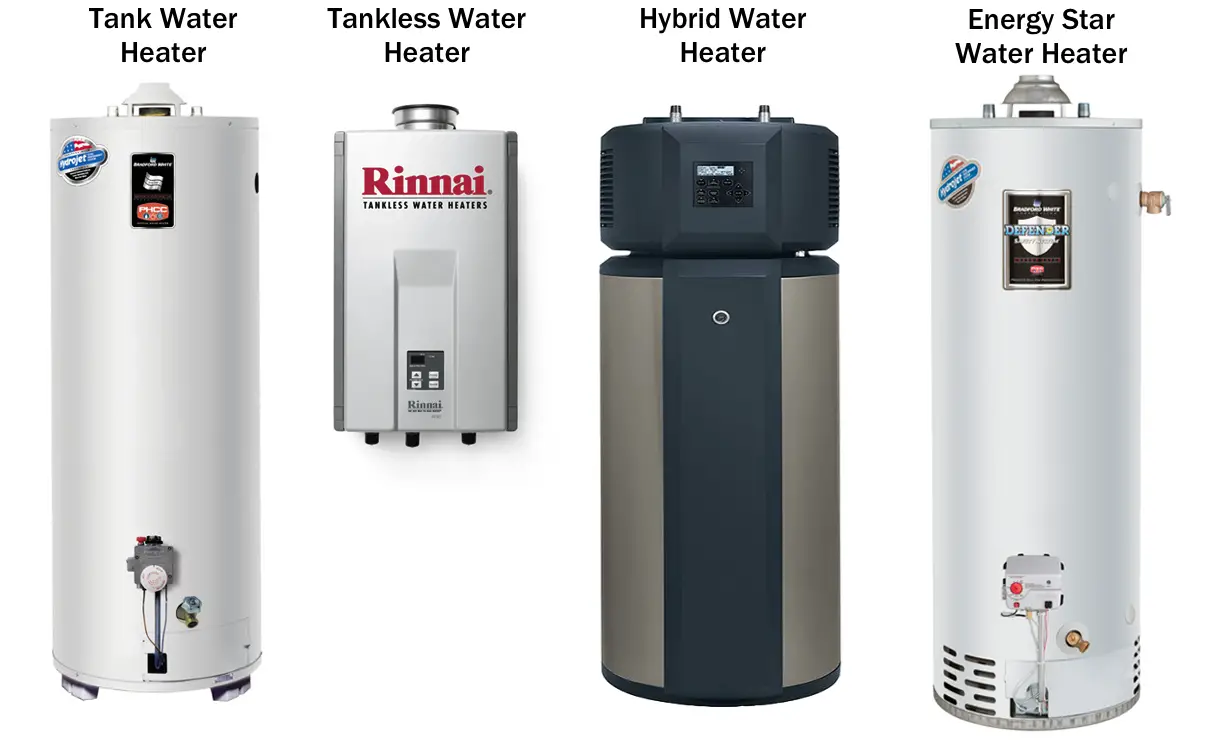
A tank heater keeps 30 to 80 gallons of water hot and ready at all times. When you use hot water, cold water refills the tank and is reheated. Because the water sits hot even when nobody uses it, some heat is always lost through the tank walls. This is called standby heat loss.
Tankless (on-demand) water heaters
A tankless heater has no storage. When you open a hot tap, water flows through a powerful gas burner or electric elements and is heated instantly. There is no standby loss, and you never “run out” of hot water, but the unit can only heat a limited flow at once, typically 2 to 5 gallons per minute according to the Department of Energy.
Tank vs tankless: side-by-side comparison
| Tank | Tankless | |
|---|---|---|
| Installed cost | About $600 to $2,500 | About $1,400 to $3,900 |
| Typical lifespan | About 8 to 15 years | About 15 to 20+ years |
| Energy efficiency | Loses heat while storing water | No standby loss; 24% to 34% more efficient for homes using up to 41 gallons a day (DOE) |
| Hot water supply | Limited by tank size; can run out | Continuous, but limited by flow rate (GPM) |
| Simultaneous use | Good, until the tank empties | Limited by the unit’s GPM at your temperature rise |
| Space | Large floor footprint | Compact, wall-mounted |
| Installation | Simple replacement in most homes | May need a larger gas line, new venting or electrical upgrades |
| Maintenance | Flush sediment, check anode rod | Descale yearly, especially in hard water |
Costs are typical US installed ranges and vary by region, fuel type and the work needed.
Energy savings: how much does tankless really save?
According to the US Department of Energy, for homes that use 41 gallons or less of hot water a day, tankless heaters can be 24% to 34% more energy efficient than conventional storage tanks. For homes using a lot of hot water (around 86 gallons a day), the advantage shrinks to about 8% to 14%.
In other words, tankless saves the most for smaller households and those who use hot water in short bursts. Larger families still save, but less. Because tankless units cost more to install, the payback period depends heavily on your usage and energy prices.
Lifespan and long-term value
Tank heaters typically last about 8 to 12 years before the tank corrodes or leaks (some last up to 15). Tankless units typically last 15 to 20 years or more, with the DOE noting most last over 20 years with good care. Over 20 years, you might buy two tank heaters versus one tankless unit, which narrows the upfront price gap. Know the warning signs in our guide to signs a water heater is going bad.
Pros and cons
Tank water heaters
- Pros: lower upfront cost, simple replacement, handles several fixtures at once until the tank empties, familiar technology.
- Cons: standby heat loss, can run out of hot water, shorter lifespan, takes up floor space, risk of tank leaks with age.
Tankless water heaters
- Pros: endless hot water, lower running costs, longer life, compact.
- Cons: higher installed cost, limited flow when several fixtures run at once, may need gas line, venting or electrical upgrades, needs regular descaling. See all the details in tankless water heater pros and cons.
Which is right for your home?
| Your situation | Better choice |
|---|---|
| Tight budget, existing tank just failed | Tank (like-for-like replacement) |
| 1 to 3 people, want lower bills and long life | Tankless |
| Large family with lots of overlapping showers | Large gas tankless, or a big tank or heat pump tank |
| Small home or limited space | Tankless (wall-mounted) |
| Electric-only home in a cold climate | Heat pump tank (electric tankless may struggle with cold incoming water) |
| Vacation home or occasional use | Tankless (no standby loss while empty) |
Going tankless? The most important step is getting the size right. Use our tankless sizing guide before you buy, and compare fuel options in gas vs electric water heaters.
What about heat pump water heaters?
A heat pump water heater is a tank that uses electricity to move heat from the surrounding air into the water, instead of creating heat with elements. ENERGY STAR says certified models can be up to about four times more efficient than conventional electric water heaters and can save a family of four around $600 a year. They need a space with enough air volume and work best in warmer areas of the home, such as a garage or basement in mild climates.
Compare tankless water heaters on Amazon → | Compare heat pump water heaters →
Frequently asked questions
Is a tankless water heater worth it?
Often yes for smaller households and long-term owners, thanks to lower running costs and a longer lifespan. If you need the cheapest replacement today, or your home would need costly gas or electrical upgrades, a tank may make more financial sense.
Do tankless water heaters run out of hot water?
No, they heat water continuously. But they can only heat a limited flow at once, so running too many fixtures together can lower the temperature.
Which lasts longer, tank or tankless?
Tankless units typically last longer: about 15 to 20+ years, versus about 8 to 15 years for tanks.
Can I replace a tank with a tankless heater myself?
It is not recommended. Switching usually involves gas line sizing, venting or high-current electrical work, and permits. Hire a licensed plumber or electrician.
Sources: US Department of Energy (Energy Saver: tankless or demand-type water heaters), ENERGY STAR heat pump water heater fact sheet, Rheem (lifespan comparison) and NerdWallet (2026 installed cost ranges). Figures are typical and vary by home and region.